Updated: July 2026
Komodo vs. Raja Ampat: Which Indonesian Paradise is Right for Your Luxury Sailing Trip?
Electric Yacht Komodo is a curated Indonesia luxury tourism experience offered by Electric Yacht Komodo: handpicked routes, vetted operators, transparent pricing, and 24/7 concierge support across Indonesia.
- What makes Electric Yacht Komodo a premium experience.
- How Electric Yacht Komodo curates exclusive access and concierge logistics.
- Routes, seasons, and pricing transparency — no hidden fees.
Komodo vs. Raja Ampat: Which Indonesian Paradise is Right for Your Luxury Sailing Trip?
Choosing between Indonesia’s two premier sailing destinations, Komodo and Raja Ampat, presents a delightful yet difficult decision. Both offer top-tier marine environments, yet they are profoundly different. Komodo National Park, established in 1980, is a compact group of 29 islands, while Raja Ampat is a sprawling archipelago of over 1,500 isles. This guide provides an expert comparison, drawing on our charter experience to help you select the destination that aligns with your vision for an memorable Indonesian journey, perhaps aboard a silent, sustainable electric yacht Komodo charter.
The Lay of the Land: Geography and Accessibility
Your journey’s beginning often dictates its tone. Komodo, set within the Lesser Sunda Islands, is defined by its accessibility. A short, 60-minute flight from Denpasar, Bali, lands you in Labuan Bajo, the gateway to the 1,733-square-kilometer Komodo National Park. The park itself is a compact archipelago of rugged, volcanic islands. The landscape is unexpectedly dramatic and arid; savannah-like hills burnished gold by the sun plunge into turquoise seas, creating a stark, powerful beauty that feels ancient and untamed.
Raja Ampat, by contrast, lies in the far-flung province of West Papua, a realm of ultimate remoteness. Reaching it requires more commitment: a direct 4-hour flight from Jakarta to Sorong, followed by a transfer to the islands. This isolation is precisely its allure. The scenery is one of lush, tropical abundance. Over 1,500 jungle-clad limestone karsts—covering a marine area of over 40,000 square kilometers—rise from placid, emerald waters, forming a labyrinthine seascape of striking scale. It is a softer, greener, more bewilderingly vast paradise.
Underwater Realms: Diving and Snorkelling
Beneath the waves, the two destinations offer distinct but equally compelling experiences. Komodo is a world of action ruled by powerful currents that can exceed 8 knots in certain channels. These nutrient-rich flows attract an impressive cast of megafauna. Diving here is about encounters with giants: squadrons of majestic manta rays with wingspans up to 5.5 meters, reef sharks patrolling coral walls, and vast schools of pelagic fish. Sites like Batu Bolong and Castle Rock are legendary for their high-voltage energy and sheer density of life.
Raja Ampat is the global epicentre of marine biodiversity. As the heart of the Coral Triangle, its ecosystem is without peer, boasting over 600 species of hard coral—that’s 75% of all known species on Earth—and more than 1,700 species of reef fish. The experience is less about chasing large animals and more about total immersion in a kaleidoscope of life. Pristine coral gardens stretch for hectares, populated by a dizzying range of macro critters and impossibly vibrant reef fish. It is a sanctuary of exceptional richness, a living library of marine evolution.
Onshore Adventures: Dragons, Peaks, and Birds of Paradise
Above the water, the terrestrial highlights are just as unique. Komodo’s main attraction is the Komodo dragon, the world’s largest lizard, which can grow up to 3 meters long and weigh 70 kilograms. A guided trek on Rinca or Komodo offers a primal thrill, observing these prehistoric reptiles from a population of roughly 3,000 in their only native habitat. The adventure continues with a hike to the summit of Padar Island for its iconic panorama of three distinct bays, and a visit to the famed Pink Beach, its sand tinted by red coral fragments.
In Raja Ampat, the treasures are found in the canopy. The islands are a haven for ornithologists, home to endemic species like the Red and Wilson’s Birds of Paradise. A pre-dawn trek to witness their elaborate mating dance is a truly magical experience. Onshore activities also include climbing the 320 steps up the karst formations of Piaynemo for sweeping archipelago views and engaging with the warm, welcoming cultures of the local Papuan villages that have inhabited these islands for centuries.
Sailing Conditions and The Best Time to Visit
Timing is crucial for any yacht charter. Komodo’s prime sailing season runs through the dry season, from April to November. During these months, seas are calm, skies are clear, and underwater visibility often exceeds 30 meters. The park’s compact size means a comprehensive itinerary can be enjoyed within a seven to ten-day charter. Navigating these waters on an electric yacht adds another layer of harmony, with engine noise below 50 decibels allowing for silent approaches to wildlife havens, compared to the 100+ decibels of a traditional engine.
Raja Ampat’s season is the reverse, running from October to April to coincide with the calmest seas. Its sheer scale—covering over 40,000 square kilometres—means that longer charters of ten days or more are recommended to do it justice. Exploring the distinct regions, from the northern islands around Waigeo to the dramatic southern landscapes of Misool, requires significant sailing time. The reward is a profound sense of discovery in a truly untouched corner of the world.
The Verdict: Choosing Your Indonesian Charter
As an editorial team committed to providing clear, unbiased guidance, our conclusion is simple: the right choice depends entirely on your priorities. There is no “better” destination, only the one that is better for you.
Choose Komodo if you value easier international access, dramatic, sun-drenched landscapes, and the thrill of encounters with iconic megafauna like Komodo dragons and manta rays. It is the perfect destination for a deeply immersive and action-packed charter of one to two weeks, especially for those who appreciate the blend of raw nature and refined accessibility.
Choose Raja Ampat if your heart is set on ultimate seclusion, exceptional underwater biodiversity, and lush, emerald-green scenery. It is an expedition for the dedicated explorer who is willing to travel further for the reward of discovering a world teeming with a variety of life found nowhere else on the planet. It is a longer, more profound commitment to immersion in the wild.
Whichever you select, sailing these waters is an experience that stays with you. For those drawn to the ancient isles of the dragon, a bespoke electric yacht Komodo charter offers the most sophisticated and sustainable way to connect with this powerful landscape.
Begin Your Journey
To discuss a bespoke itinerary tailored to your preferences in the Komodo National Park, please contact our charter specialists. We can provide detailed advice on crafting the perfect voyage through this exceptional part of the world. Reach out via email at [email protected] or on WhatsApp at +62 811-3823-875 to begin the conversation.
Frequently Asked Questions
What is the main difference in scenery between Komodo and Raja Ampat?
Komodo is characterized by a dry, savannah-like landscape with rugged volcanic hills and remarkable multi-coloured beaches. It feels ancient and dramatic. Raja Ampat is a lush, tropical environment defined by thousands of jungle-covered limestone karst islands rising from emerald waters, creating a more intricate and verdant seascape. The visual contrast is one of the most significant differentiators between the two destinations.
Which destination is easier to get to?
Komodo is significantly more accessible. You can fly directly to Labuan Bajo (LBJ) from major Indonesian hubs like Bali (DPS) or Jakarta (CGK). From the airport, the national park is a very short sail away. Reaching Raja Ampat requires more travel time, typically involving a flight to Sorong (SOQ) in West Papua, followed by a multi-hour ferry or private boat transfer to the main island areas.
Is Komodo or Raja Ampat better for non-divers?
Both are fantastic, but Komodo offers a slightly more diverse range of top-tier non-diving activities. These include the iconic trek to see Komodo dragons, hiking Padar Island for its famous viewpoint, and relaxing on unique Pink Beaches. While Raja Ampat has superb snorkelling, kayaking, and birdwatching, Komodo’s land-based attractions are more famous and varied for those not spending all their time underwater.
I want to see big marine life. Which should I choose?
For consistent encounters with large marine animals, Komodo is arguably the better choice. Its powerful currents attract a high concentration of manta rays (especially at Manta Point), various species of sharks, large turtles, and schooling pelagic fish. While Raja Ampat has its share of large animals, Komodo’s geography makes these encounters a more central and predictable feature of the diving experience.
What is the best time of year to charter a yacht in Komodo?
The optimal time for a yacht charter in Komodo is during the dry season, which typically runs from April to November. During this period, you can expect sunny skies, calm seas, and excellent underwater visibility. This makes for ideal sailing conditions and the most comfortable experience for both on-water and onshore activities. The shoulder months of April, May, and October often provide a perfect balance of great weather and fewer visitors.
How long of a charter do I need for Komodo?
A 5 to 7-day charter is sufficient to experience the core highlights of the Komodo National Park, including Rinca, Padar, and the central diving areas. However, to explore more deeply, visit more remote sites, and enjoy a more relaxed pace, we recommend a charter of 8 to 10 days. This allows for greater flexibility and a more immersive journey through the archipelago’s diverse offerings.
Can I see Komodo dragons in Raja Ampat?
No, the Komodo dragon is endemic to the islands within and surrounding the Komodo National Park in the Lesser Sunda Islands. You will not find them in Raja Ampat. The unique terrestrial wildlife highlight in Raja Ampat is the spectacular range of birdlife, most notably the endemic Birds of Paradise, which are a primary reason for onshore jungle treks there.
What makes an electric yacht a better choice for Komodo?
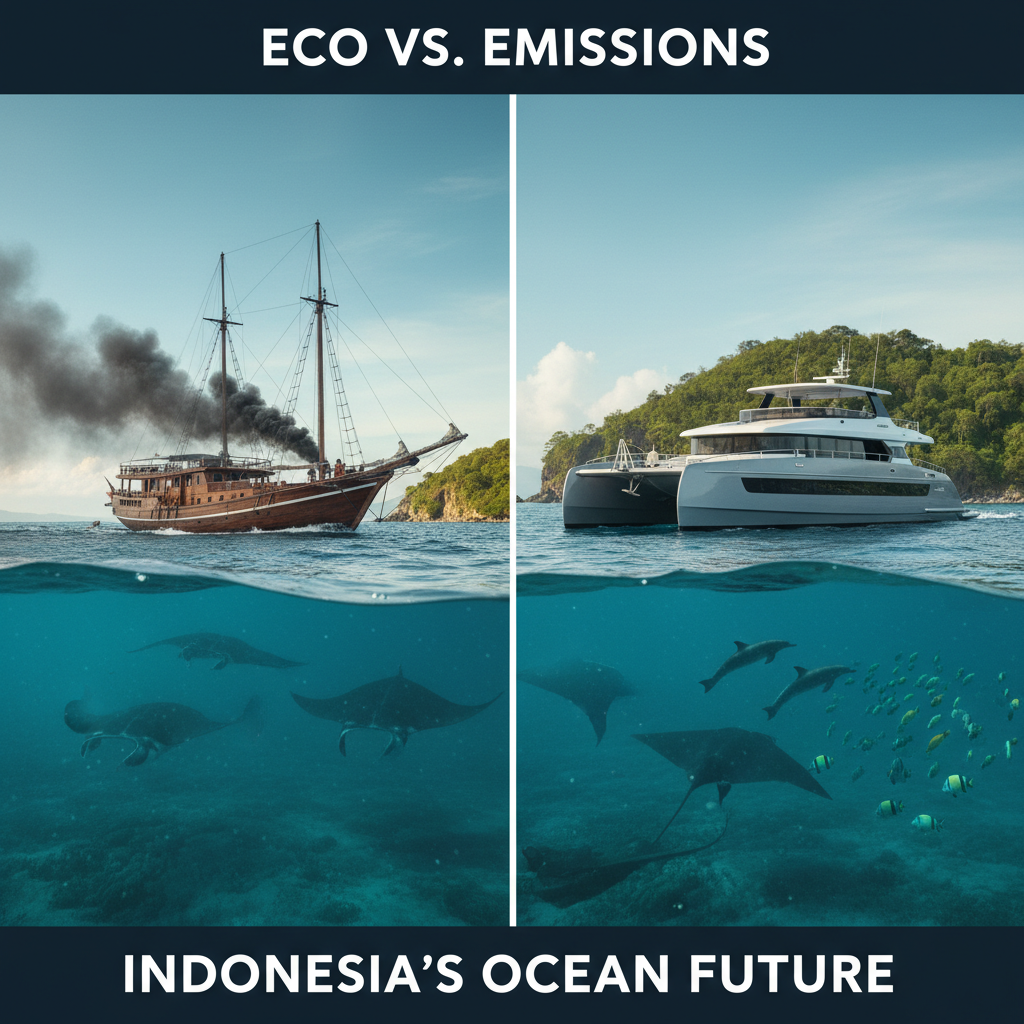
An electric yacht offers a superior way to experience Komodo’s pristine environment. The silent propulsion allows you to approach wildlife, both above and below water, without disturbance, enhancing the sense of connection to nature. It eliminates engine fumes and vibrations, creating a more peaceful and luxurious atmosphere on board. Most importantly, it aligns with the conservation ethos of the National Park by minimising your carbon footprint and ecological impact.
Is the water temperature different between the two locations?
Yes, there is a noticeable difference. Raja Ampat generally has warmer waters, consistently ranging from 28-30°C (82-86°F) year-round. Komodo’s water temperatures can be more variable due to the strong currents and upwellings from the deep. While the northern sites are warm, central and southern sites can drop to 21-25°C (70-77°F), often requiring a thicker wetsuit for diving.
Which location is more remote and less crowded?
Raja Ampat is significantly more remote and less crowded than Komodo. Its vast size and challenging accessibility mean that visitor numbers are naturally lower, and it’s common to feel like you have entire bays and dive sites to yourself. While Komodo is by no means overcrowded, especially on a private charter, its proximity to Labuan Bajo makes it a more popular and frequented destination.
Do I need to be an advanced diver for Komodo?
While Komodo is famous for its strong currents, there are many dive sites suitable for all levels, from novice to expert. An experienced charter operator and dive guide will tailor the itinerary to your certification level, selecting sheltered bays and calmer sites for less experienced divers. However, to experience the most famous high-action sites like Batu Bolong or Castle Rock, advanced certification and experience with currents are highly recommended.